

2026–2027 Scent Directions: The Five Trends Rewriting Fragrance
PerfumeryThe fragrance category is moving faster than retail can restock. Between Middle Eastern houses out-performing legacy Western majors, TikTok turning bottles into 12-hour trail contests, and Pinterest quietly documenting a shift from “signature scent” to “scent wardrobe,” five directions stand out as the ones brands, buyers, and perfumers need on their radar for 2026–2027.
1. The Ultra-Viral Gourmand Upgrade: Desserts and Coffee Dates
Pistachio, kunafa, and dates in every form are having a moment. The Dubai chocolate phenomenon opened the door, and specialty coffee and matcha culture walked right through it, bringing with them a taste for buttery dates, warm nuttiness, and airy cream built to smell like a high-end dessert rather than childhood candy.
Kayali rode the pistachio-cream note into major viral traction, while Lattafa Khamrah and Lattafa Angham remain the benchmark for gourmand longevity: dates, praline, and vanilla absolute cut with cinnamon and amberwood for 12+ hour trails. BORNTOSTANDOUT’s Black Karak leans even further into Middle Eastern dessert-café territory.
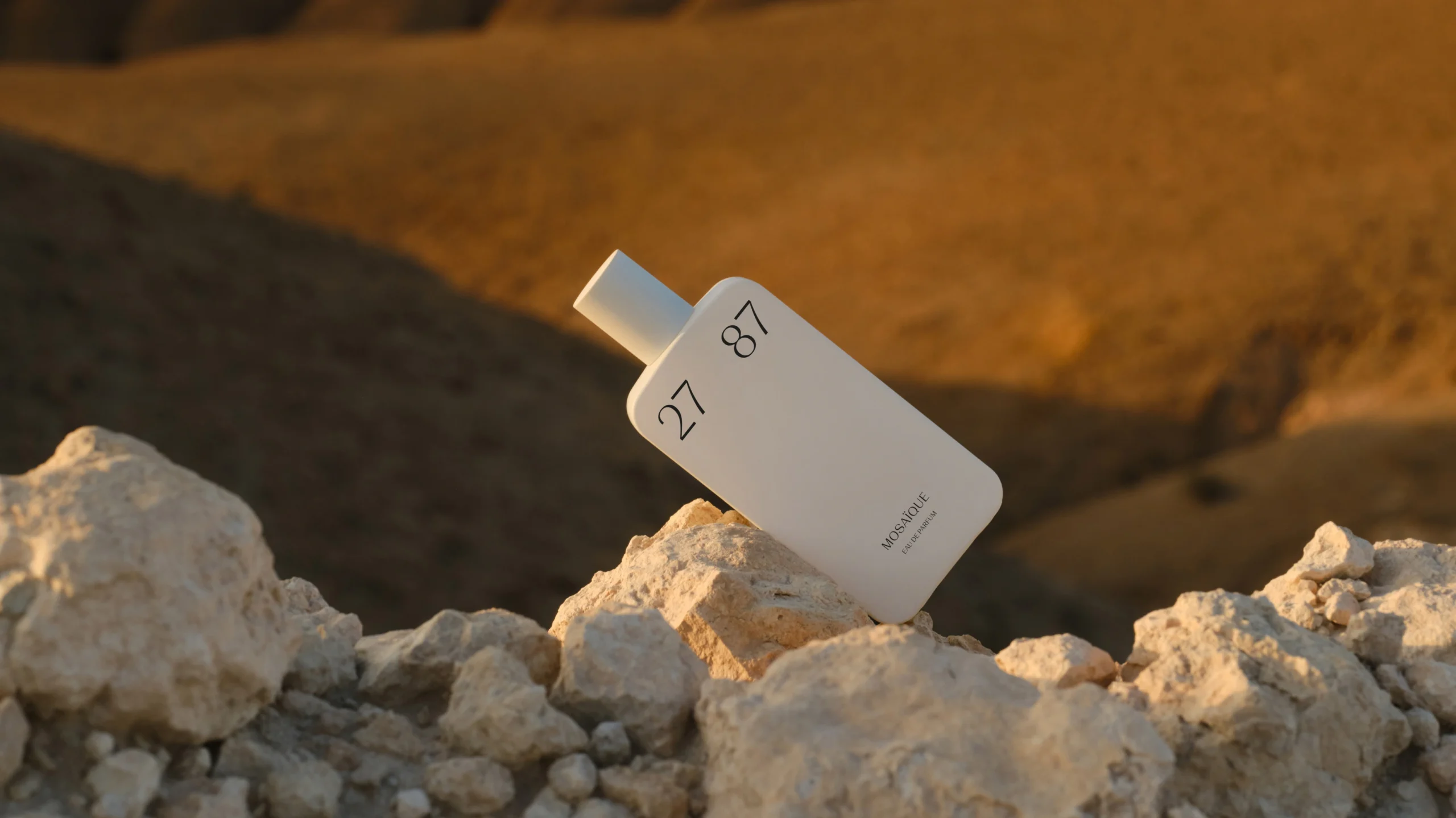
Western niche houses are following the same script. New Notes’ Latte Pistachio builds its entire concept around the note pairing that defines this trend: pistachio, milk, and cardamom over sandalwood and musk, styled explicitly as “a frothy latte meets pistachio ice cream.” 27 87’s Mosaïque takes a smokier route into the same territory, closing on hazelnut cocoa spread and mate beneath tobacco, patchouli, and honey, proof the coffee-and-cocoa gourmand instinct isn’t confined to Middle Eastern labels. And Maison Crivelli’s Santal Volcanique brings roasted coffee into a spicy sandalwood base (ginger, cardamom, cedarwood), showing the note traveling into French niche perfumery too.
Milky lattes, such as coffee, chai, matcha, mate, are the adjacent wave, softening gourmand sweetness with café-au-lait creaminess: the day-time uniform of a flat white in one hand and a warm-milk fragrance on the skin.
Why it matters: gourmand fragrance has consistently ranked among the top-searched fragrance families on TikTok and Pinterest over the past two years, and dupe/alternative content for Khamrah and Yara routinely pulls millions of views, proof that “smells expensive, costs $30” is still the most reliable growth lever in the category. The fact that Western niche houses (New Notes, 27 87, Crivelli) are now building original concepts around the same pistachio-coffee-cocoa axis signals this isn’t a Gulf-only trend anymore; it’s converged into a shared, cross-market gourmand language.
2. Ambroxan & Oakmoss: The High-Performance East-West Hybrid
Middle Eastern houses aren’t just competing with Western niche and luxury; they’re re-engineering it for longevity, and winning on performance.
Rasasi Hawas Black takes a classic bright citrus (pineapple, grapefruit, bergamot), historically a fast-fading Western fresh accord, and anchors it with cedarwood, oakmoss, and dark ambergris for a 10–14 hour wear time. Khadlaj Island Dreams has become one of 2026’s biggest breakout “dupe” conversations, positioned as an affordable, high-concentration alternative to ultra-luxury releases like Louis Vuitton’s Symphony: bitter grapefruit and ginger over a heavy ambroxan base.
Why it matters: this is the trend line where price-to-performance math is driving purchase decisions. Buyers are voting with wallets for scents that outlast their Western counterparts 2–3x over, and Gulf houses are capturing that demand fastest.
3. Sea Salt, Seaweed and New Juiciness: Twisted Aquatic Notes
Salty, skin-like aquatics have moved from niche curiosity to must-have brand-portfolio note, pushed further this cycle by an unexpected pairing with exotic, even divisive, fruit.
Orto Parisi’s Megamare remains the reigning best-seller that opened the category and continues to anchor it. Santa Eulalia Perfumes’ Marinis offers a classic Mediterranean-herb take on the salty theme, while Kintsugi Perfumes’ Hanzo goes fully green-marine with a surprising seaweed note.
And then you have the juicy, lasting fruity scents running alongside it. On the daring end: 27 87’s Archive Collection and BORNTOSTANDOUT have both launched durian-adjacent scents, one confrontational, one mellowed, pushing “exotic fruit” past mango and lychee into genuinely polarizing territory. BORNTOSTANDOUT doubles down elsewhere too: its Black Guava opens on guava and Madagascar mandarin before swerving into oud, geranium, and ambroxan, proving the house treats fruit as a provocation rather than a garnish.
The mellower end of the same wave is just as loud commercially. Kayali’s Sparkling Lychee (blackcurrant, lychee, Damask rose, sugared amber) has helped push lychee into one of the fragrance notes popping up all over the industry radar this year, while Mugler’s Angel Nova (raspberry, lychee, Damask rose over akigalawood and benzoin) shows the note crossing straight into designer-brand territory. Further out, tropical fruit is getting a gourmand upgrade of its own: launches built around caramelized banana with maple syrup, ripe mango with coconut milk, and explosive maracuja over a smoky resinous base signal that “juicy” is being treated as seriously as any dessert accord.
Why it matters: the format shift matters as much as the notes: salty aquatics and fruity juices are increasingly launching as hair mists and body sprays rather than full EDPs, tracking the broader move toward lighter, more portable, more affordable ways to scent.
4. Roses and Ceremonial Woods, Reworked
Pure barnyard-style oud has receded in favor of cleaner, more polished, more unisex variations designed for a global audience rather than a regional one.
Swiss Arabian Shaghaf Oud Tonka and Ajmal Rose Wood are viral favorites precisely because they treat rose with a smoky, refined wood backdrop instead of a soapy or jammy one. Maison Francis Kurkdijan’s À la Rose continues to anchor the “beautiful modern rose, done properly” conversation across nearly every price tier.
Patchouli itself is being reworked too: Nasomatto’s Micodelirium masks it under earth and mushroom facets for a fully modern, un-70s take on the note. Marc-Antoine Barrois’ B683 pushes the same idea from the couture side: a patchouli-leather built on saffron, cumin, and sandalwood that reads spiced and architectural rather than dusty or retro, and has become the house’s signature “patchouli, reconsidered” statement.
On the ceremonial side, palo santo is emerging as the smoky-wood note doing for ritual-and-wellness fragrance what oud did for depth. Niche naturals houses have leaned further into the ingredient’s ritual roots directly, building fragrances explicitly around palo santo’s association with cleansing and grounding, a framing that’s helped push the note out of candles and incense sticks and into fine fragrance proper.
Why it matters: “gateway oud” and “modern rose” formats are the entry point converting fresh fragrance buyers into the Middle Eastern category; accessibility, not authenticity-signaling, is now the growth strategy. Palo santo and reworked patchouli extend that same logic into ritual and wellness-adjacent scent: notes once tied to burning rope or 1970s hippie chypre are being repositioned as modern, meditative, and market-ready.
5. Skin Musk & Scent Stacking: The Layering Economy
The biggest structural shift isn’t a note; it’s a behavior change. Consumers are moving from “one signature scent” to building a personal fragrance wardrobe.
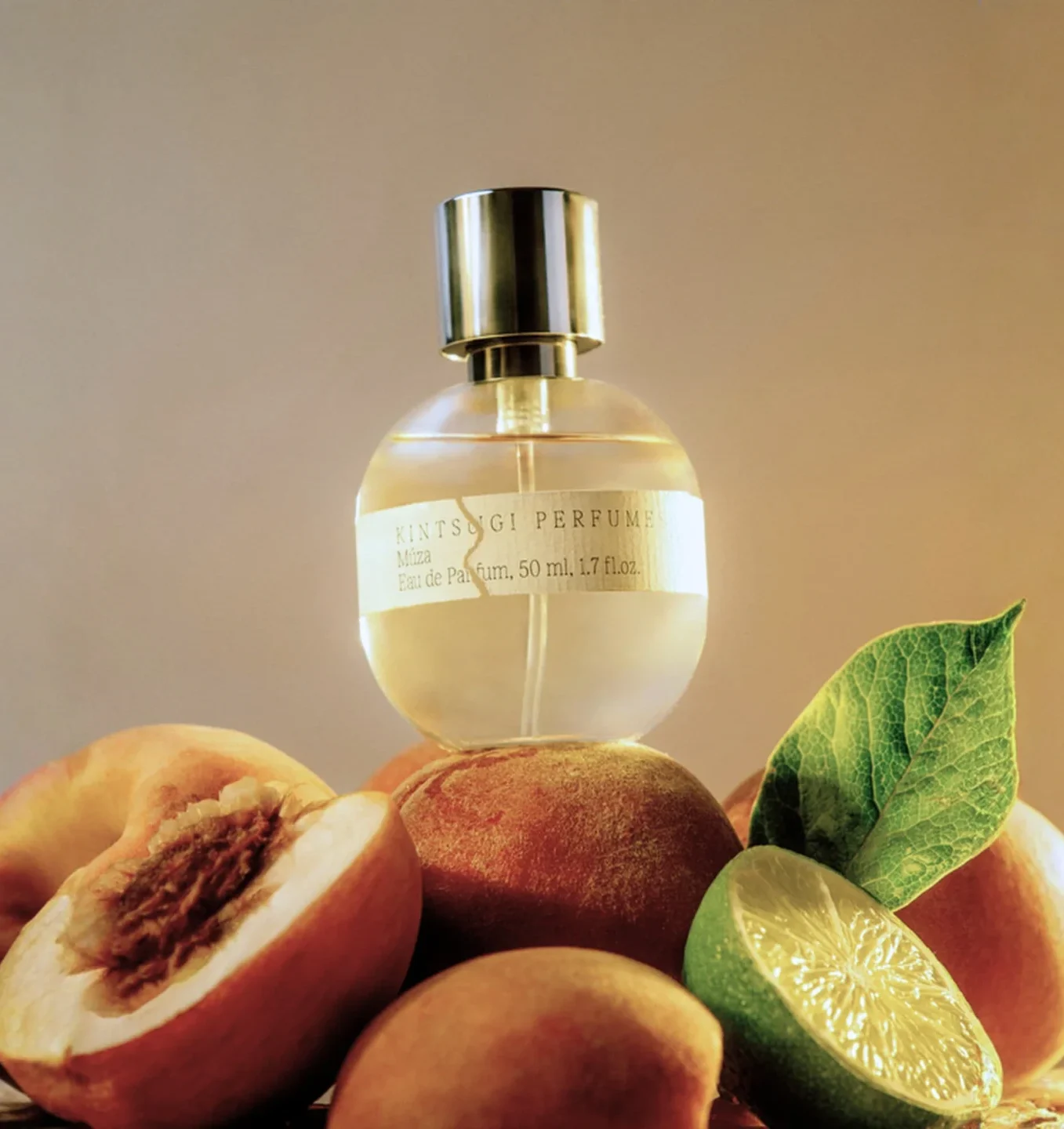
TOBBA’s Musc Albedo, 27 87’s Lametta, and Kintsugi Perfumes’ MUZA are just a few examples exemplifying the clean-musk base layer driving this shift.
Per Pinterest’s Global Head of Trends & Insights, Sydney Stanback, Scent Stacking is one of Pinterest Predicts’ 21 trends for 2026, replacing the single “signature perfume” model. Pinterest searches for “niche perfume collection” are up 500%, “perfume layering combinations” up 125%, and “scent layering” up 75%, evidence that consumers now want to learn composition, not just buy a bottle. Pinterest also found that 42% of global respondents only adopt a trend if it genuinely suits them, and nearly a quarter of Gen Z and Millennial trend participants say personalizing a trend is how they avoid trend fatigue.
Why it matters: layering isn’t a niche ritual anymore; it’s the dominant post-signature-scent behavior, and it rewards brands that sell in smaller, stackable, mixable formats over single hero bottles.
The Takeaway
Across all five directions, the throughline is the same: performance (longevity, projection), affordability (dupe culture, CPOs), and personalization (layering, stacking) are outcompeting pure prestige. The houses winning searches and sell-through right now are the ones treating fragrance as a modular, statistically trackable category rather than a single-bottle luxury purchase.

